
Choose your animal first, then your route
Most people plan a Tanzania wildlife safari backwards. They pick the famous parks, book the lodges, and only then wonder whether they will actually see the animals they came for. The better way is to start with the wildlife itself: decide which animal sits at the top of your list — lion, elephant, leopard, rhino, wild dog, chimpanzee, or the great migration itself — and let that decision shape your route. Tanzania is vast and no single itinerary covers everything; the travellers who come home happiest are the ones whose route was built around what they most wanted to see.
This guide is organised by animal rather than by park. For each of Tanzania's headline species we set out where your chances are genuinely best, which months tilt the odds in your favour, and what a realistic sighting looks like — not brochure promises, but the honest assessment we give our own guests at Sokwe Africa Safaris in Arusha. If you would rather read the same story park by park, our companion piece on Tanzania's wildlife parks covers the geography in depth; this article is the wildlife-first version, built for deciding.
Big cats: lion, cheetah and leopard
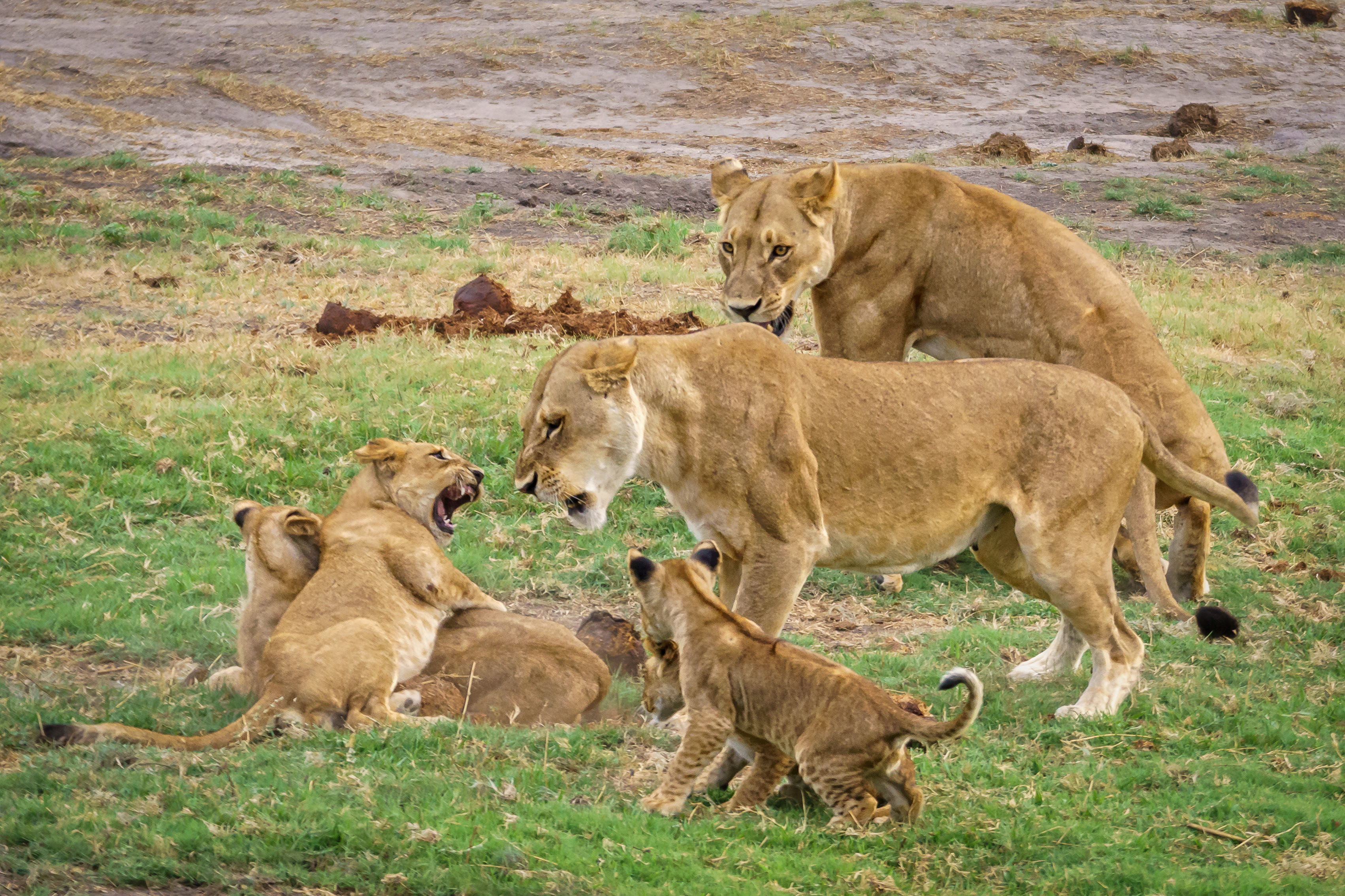
Lion — the Serengeti, in almost any month
If lions are your priority, the answer is simple: go to the Serengeti. The ecosystem holds roughly three thousand lions, the largest population in Africa, and on a safari of three days or more a sighting is close to guaranteed in any month of the year. The Seronera Valley in the central Serengeti is the most reliable single area, its resident prides anchored to the river lines and kopjes year-round, while the granite outcrops scattered across the plains serve as shaded lookout posts where lions drape themselves in plain view.
For something beyond the standard sighting, follow the migration: where the wildebeest herds are, the lions are hunting, so a camp near the herds offers the best chance of watching a hunt rather than a sleeping pride. Ngorongoro Crater is the other near-certainty, its resident lions living at one of the highest densities on earth. For a deeper look at the cats and their neighbours, see our guide to the animals of the Serengeti.
Cheetah — the short-grass plains of the south-east
Cheetah need open country to hunt, which makes the short-grass plains of the south-eastern Serengeti and the Ndutu area the finest cheetah territory in Africa. From December to April, when the migration's wildebeest drop their calves here, sightings are frequent and often spectacular — a mother with cubs scanning from a termite mound, or a full hunt unfolding across grass short enough to watch every stride. The eastern plains around Namiri are outstanding in the dry season too. Cheetah are never as certain as lion, but in the right season most of our guests see them, and a guide who knows the individual cats' territories measurably improves the odds.
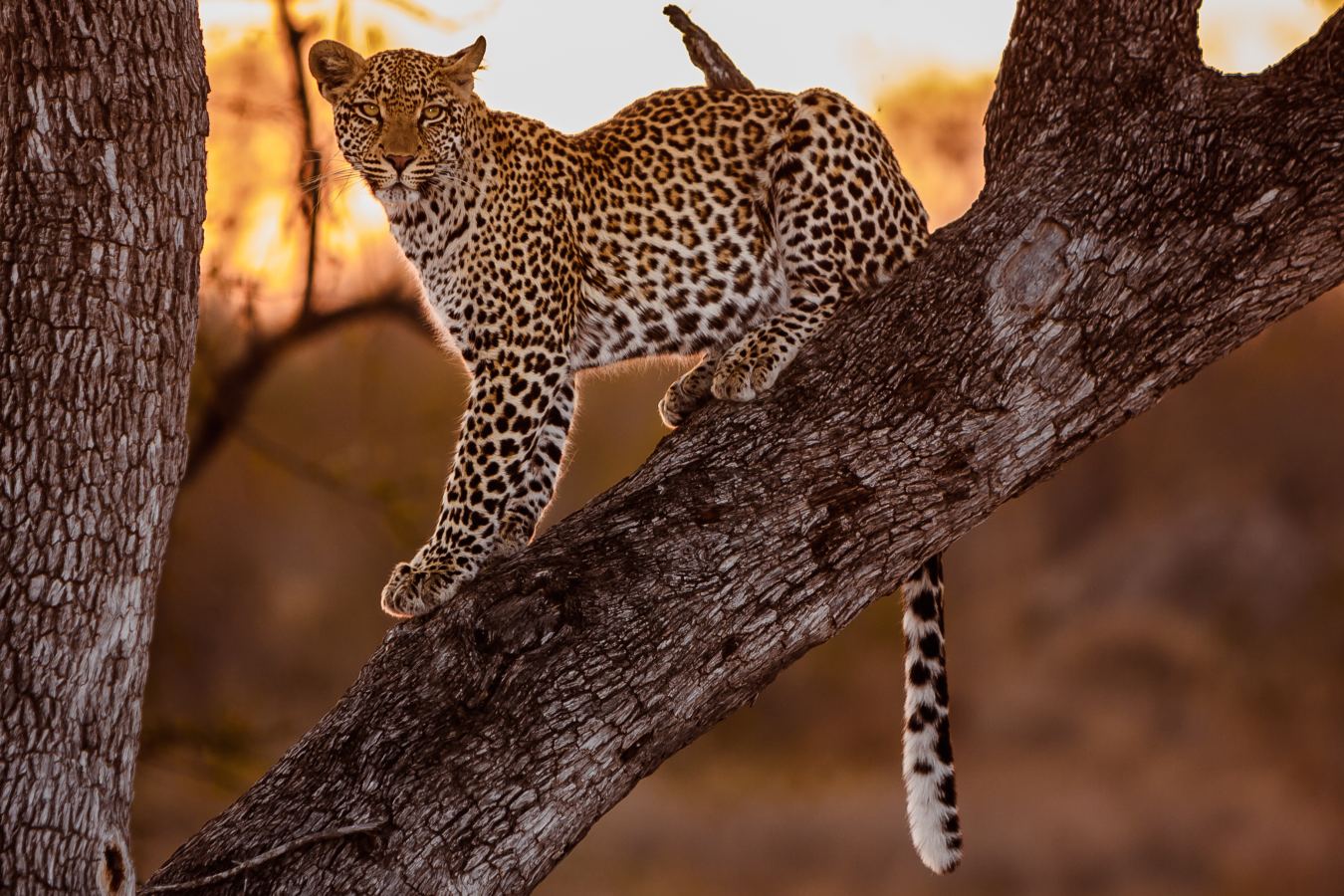
Leopard — the sausage trees of Seronera
The leopard is the most beautiful and most elusive of the big cats, and the Seronera River valley in the central Serengeti is the most reliable place in Tanzania to find one. The riverine corridor of sausage trees and yellow-barked acacias gives leopards daytime resting platforms, and guides here scan the horizontal branches as a matter of routine. Sightings are frequent enough that two or three days based in the central Serengeti give you a genuinely good chance in any season — a tail hanging from a limb, a kill wedged in a fork, occasionally a full descent at dusk.
Leopards are present in every major park — Tarangire's riverine woodland, Manyara's forest and Ruaha's rocky hills are all good — but elsewhere sightings are more luck than method. Our advice is blunt: if a leopard matters to you, build at least two nights in the central Serengeti into your route and tell your guide it is a priority, because a guide working the river lines deliberately at first light roughly doubles your chances. Leopard is the Big Five member most often missed on rushed itineraries, and the fix is simply time in the right valley.
Elephant: Tarangire's dry-season gathering
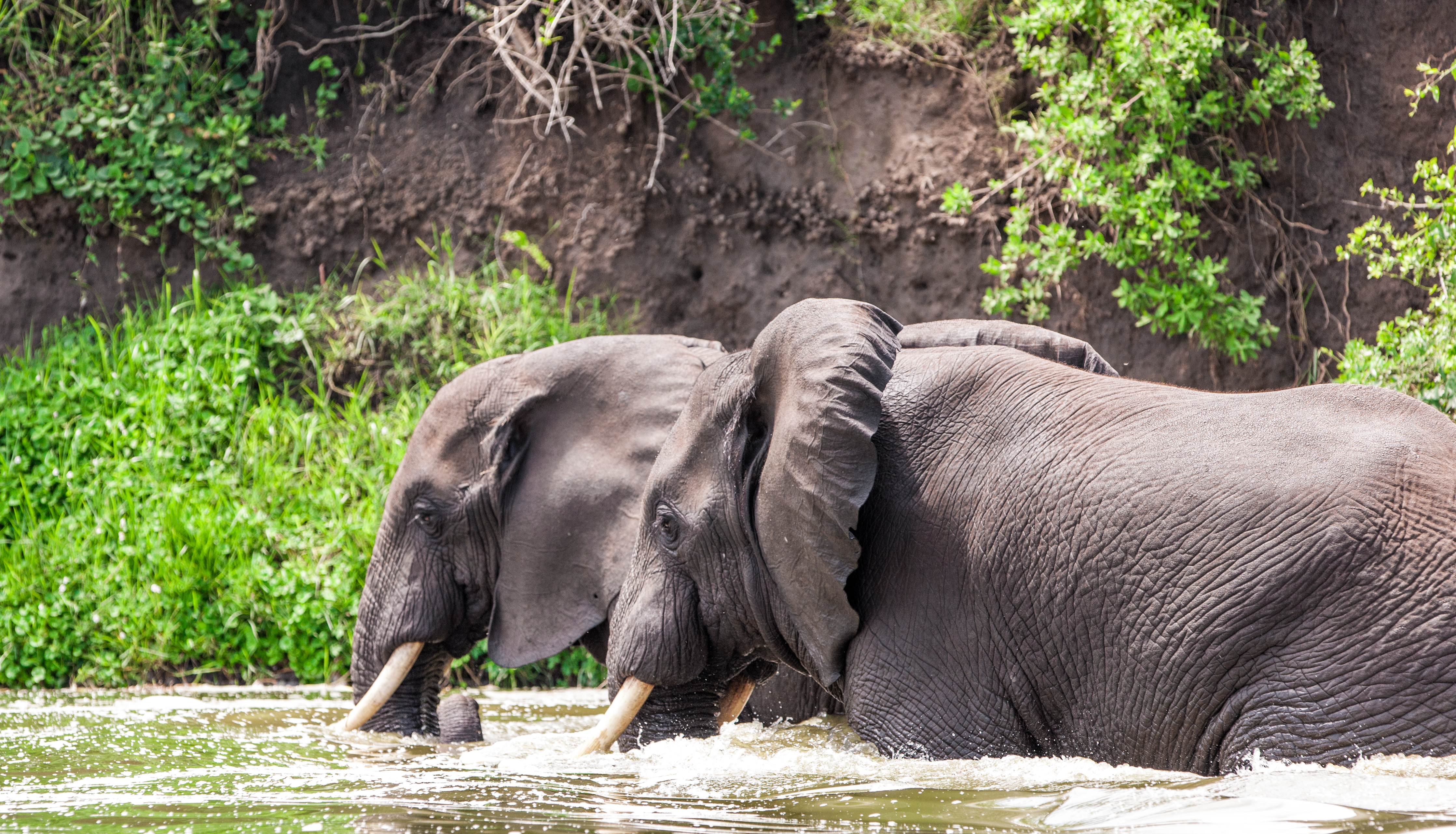
For elephants, Tarangire National Park in the dry season is one of the great wildlife spectacles anywhere. From June to October the Tarangire River becomes the only reliable water for miles, and the park's elephants — a population in the thousands, with some of the largest herds in northern Tanzania — converge on it daily. Herds several hundred strong file down to the river beneath the baobabs, and from a well-placed lodge or a parked vehicle you can spend hours inside the gathering. Nowhere else on the northern circuit delivers elephants at this concentration.
Because Tarangire sits only two hours from Arusha, it slots easily into any northern itinerary as the opening park — an ideal first day of a Tanzania wildlife safari, with elephant density rising steadily as the dry season deepens towards October. In the green season the herds disperse, so if elephants are your headline animal, timing matters more here than almost anywhere. The southern alternative is Ruaha, whose elephant population is among the largest in East Africa and which pairs the herds with a fraction of the vehicles.
Black rhino: the Ngorongoro Crater floor
Black rhino are the hardest of the Big Five in Tanzania, and the Ngorongoro Crater is where the odds are realistic. A small, intensively protected population — a few dozen animals — lives on the crater floor, and because the crater is a natural amphitheatre with open sightlines, a full morning game drive finds rhino more often than not. The honest framing is a better-than-even chance of a sighting, frequently at a few hundred metres rather than beside the vehicle, so bring binoculars and temper expectations of a close encounter.
The Moru Kopjes area of the southern Serengeti holds the ecosystem's other small rhino population, though sightings there are rarer. For most travellers the crater is the rhino stop, and it earns its place on almost every itinerary anyway: the same morning that produces your rhino will typically deliver lion, huge bull elephants, hyena clans and flamingos on the soda lake, all inside a collapsed volcano — the most concentrated game viewing in Africa.
Wild dog: go south to Ruaha and Nyerere
The African wild dog is the connoisseur's sighting — endangered, wide-ranging and absent from most itineraries — and Tanzania's south is one of its last great strongholds. Nyerere National Park protects one of the most important wild dog populations in Africa, and Ruaha's packs are a fixture of the park's dry-season game viewing. In the north, by contrast, wild dogs are so scarce that no honest operator will promise them; if the species is on your list, a southern Tanzania safari is not optional, it is the plan.
Timing sharpens the odds considerably. During the denning season, roughly June to August, packs anchor themselves to a den site to raise pups, and camps that know the den locations can produce repeat sightings day after day. Even in the south the dogs are never a guarantee — think strong chance across three or four days rather than certainty — but a dry-season week split between Ruaha and Nyerere is as close as Africa gets to a reliable wild dog safari, with boat safaris and walking thrown in.
Chimpanzees: Mahale, on the shore of Lake Tanganyika
For chimpanzees, Tanzania offers something no other safari country can match: the Mahale Mountains, where forested peaks fall straight into the clear water of Lake Tanganyika and a habituated chimpanzee community lives within trekking distance of the beach. Treks follow the researchers' knowledge of the community's movements, and over two or three days of trekking the success rate is extremely high — the great majority of visitors sit within metres of wild chimpanzees. Gombe, Jane Goodall's old research site further north, offers a smaller, simpler version of the same experience.
The trade-offs are cost and logistics. Mahale is remote, reached by charter flight and boat, with a handful of small, superb camps, and it prices accordingly — realistically from around a thousand US dollars per person per day in 2026. The dry months from July to October are best, when the chimps range lower on the slopes and treks are shorter. As a three-night extension to a northern or southern circuit it is, for many of our guests, the most extraordinary wildlife encounter of their lives.
Flamingos and birdlife: Manyara, Natron and beyond
Tanzania's birdlife deserves headline billing of its own — over 1,100 recorded species — and flamingos are its most photogenic ambassadors. Lake Manyara's alkaline shallows draw large flocks in season, pink haze shimmering against the Rift Valley escarpment, while remote Lake Natron to the north is the breeding site for most of East Africa's lesser flamingos, a stark, otherworldly soda lake beneath the volcano Ol Doinyo Lengai. The crater's own Lake Magadi usually adds a flamingo fringe to a Ngorongoro morning.
Beyond the flamingos, every park carries its own cast: Tarangire is superb for dry-country species and raptors, and Nyerere's Rufiji waterways offer some of the best waterbird viewing in Africa from the deck of a boat. Keen birders should lean towards the green season, November to April, when residents are breeding in colour and the European migrants are in — a period that also brings lower lodge rates and emptier parks.
The great migration: a moving target, not a park
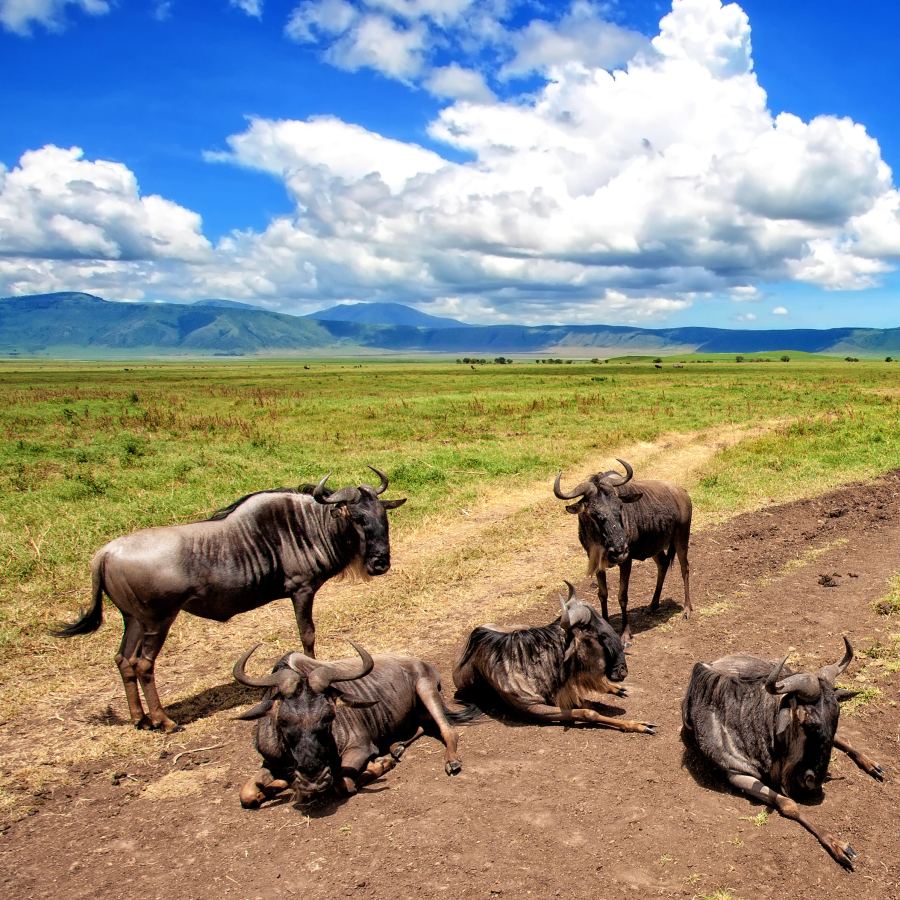
The great migration is less a species than an event — some 1.5 million wildebeest and hundreds of thousands of zebra on a year-round circuit of the Serengeti ecosystem — and seeing it well is entirely a question of matching your dates to the herds' position. From December to March they mass on the Ndutu short-grass plains for calving, with predators in close attendance; around June they push through the Western Corridor and the Grumeti; from July to October they cross and re-cross the Mara River in the north, the crossings that fill the documentaries.
The planning consequence is simple: pick your month first, then place your camps where the herds will be. A migration-focused safari is compatible with almost every animal on this list — calving season doubles as the best cheetah viewing of the year, and the northern crossings coincide with superb resident game — so for many travellers the migration becomes the spine of the route and the other species slot in around it. What it cannot do is coexist with a fixed camp in the wrong sector, which remains the most common mistake in migration planning.
Building a route by wildlife priority
Put the pieces together and clear route patterns emerge. A first-timer whose list reads lion, elephant, leopard and rhino is perfectly served by the classic northern circuit — Tarangire, the central Serengeti and Ngorongoro over six or seven days, which is the best safari in Tanzania for covering the Big Five efficiently. A cat specialist should weight the itinerary towards the Serengeti and time it to the herds. A wild dog devotee flies south to Ruaha and Nyerere in the denning months. A primate enthusiast adds Mahale. A birder goes green season and adds a boat.
Realistic 2026 budgets follow the route: a mid-range northern circuit runs roughly 450 to 700 US dollars per person per day, quality luxury from about 800 to 1,500 dollars, while fly-in southern and western additions carry a premium for the charter flights. The one rule we press on every enquiry is to buy days in the right place rather than lodges in the wrong one — three nights where your target animal actually lives beats five nights of driving past it. That is the whole philosophy of a wildlife-first Tanzania wildlife safari, and it costs nothing to apply.
Plan your safari: meet the animals of the Serengeti, compare parks in our Tanzania's wildlife parks guide, go deeper with a southern Tanzania safari, or browse our safari packages.
Decide which animal you most want to see, and the map of Tanzania draws your route for you.
Honest odds at a glance
Every operator will tell you the wildlife is wonderful; few will tell you the odds. Here is how we brief our own guests, assuming three or more days in the right park at the right time of year. Lion and elephant are near-certainties on any sensible route. Leopard is probable with time in the central Serengeti and a guide who works the river lines. Cheetah is likely on the southern plains in calving season. Rhino in the crater is better than even. Wild dog in the dry-season south is a strong chance rather than a promise, and chimpanzees at Mahale over two treks approach certainty.
- Lion — Serengeti, year-round, near-certain
- Cheetah — south-east Serengeti plains, December to April
- Elephant — Tarangire, June to October
- Leopard — central Serengeti, year-round
- Black rhino — Ngorongoro Crater, better than even
- Wild dog — Ruaha and Nyerere, June to August denning season
- Chimpanzee — Mahale, July to October
- Flamingos — Manyara, Natron and the crater lake
One closing note on honesty: no ethical operator guarantees a specific sighting, and the odds above assume competent guiding. That assumption does the heavy lifting — the gap between an average driver and a first-rate guide, on the same route in the same week, is the largest single variable in what you will see, and it is where we would spend the marginal dollar every time.
Tell us the animal at the top of your list
This is exactly how we begin every safari we design at Sokwe Africa Safaris: not with a brochure itinerary, but with a question — which animal do you most want to see? From that answer we build the route, the season, the camps and the guiding to give you the best genuine chance of the encounter you are dreaming about, and we are straight with you about the odds before you commit a dollar. Tell us the animal at the top of your list, and we will build the safari that finds it. Contact us and let us start with your answer.
Plan your Tanzania wildlife safari with Sokwe Africa Safaris